
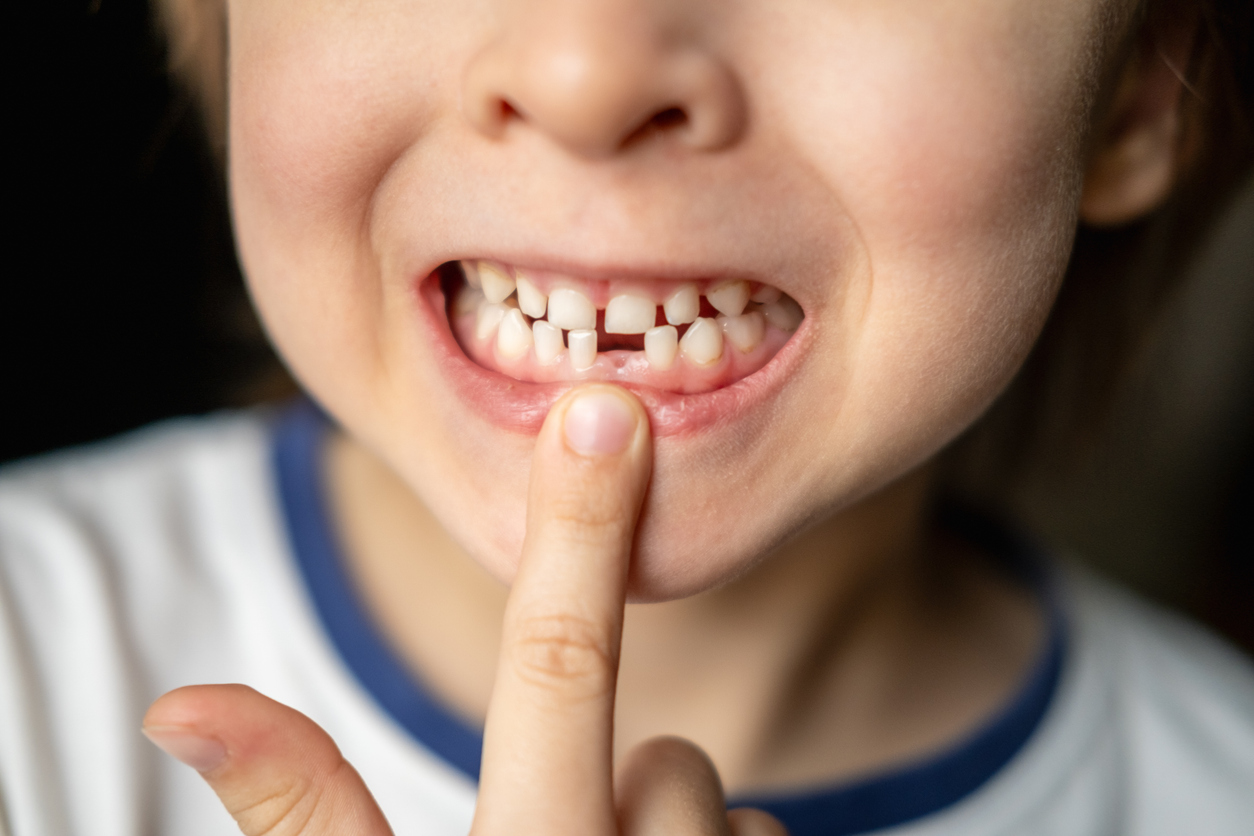
Quick answer: Children lose all 20 of their baby teeth between roughly ages 6 and 12. Those 20 baby teeth are eventually replaced by 32 permanent adult teeth, including four wisdom teeth that come in during the late teens or early twenties. Most kids follow a predictable order, starting with the bottom two front teeth around age 6.
If your child just wiggled their first loose tooth, congratulations — you’ve officially entered one of the most exciting (and Tooth-Fairy-intensive) stretches of parenting. At Children’s Choice Dental Care, we get this question from parents at nearly every appointment: how many teeth do we lose as children, and when will it all be over? The short answer is all 20 of the baby teeth, and the timeline usually spans about six years.
Here’s a full breakdown of what to expect, what order teeth typically fall out in, and when something might be worth a quick call to our team.
How Many Baby Teeth Do Children Have to Begin With?
By the time a child is about 3 years old, they should have a full set of 20 baby teeth — 10 on top and 10 on the bottom. That set is made up of:
- 8 incisors (the flat front teeth)
- 4 canines (the pointed teeth next to the incisors)
- 8 molars (the larger chewing teeth in the back)
Every one of these 20 teeth is designed to eventually fall out and be replaced by a permanent tooth. Baby teeth aren’t just placeholders, though — they help kids chew, speak clearly, and guide the permanent teeth into the correct position underneath. That’s one of the reasons our team treats cavities in baby teeth seriously, even though those teeth are on their way out.
At What Age Do Kids Start Losing Teeth?
Most children lose their first baby tooth around age 6, though anywhere between 4 and 7 is considered within the normal range. According to the American Dental Association’s tooth eruption chart, the order in which baby teeth come in usually predicts the order they’ll fall out — so kids who teethed early often lose teeth earlier too.
The last baby teeth typically fall out around age 12, right as the permanent molars are finishing their eruption. By the early teens, most kids have a near-complete set of adult teeth.
How Many Teeth Do We Lose as Children, Exactly?
All 20 baby teeth fall out over the course of childhood. None of them are meant to stay. The 32 permanent adult teeth that replace them are made up of:
| Permanent Tooth Type | Count | Replaces a Baby Tooth? |
|---|---|---|
| Incisors (front teeth) | 8 | Yes |
| Canines (pointed teeth) | 4 | Yes |
| Premolars (bicuspids) | 8 | Yes — replace baby molars |
| First molars (“6-year molars”) | 4 | No — brand-new teeth |
| Second molars (“12-year molars”) | 4 | No — brand-new teeth |
| Third molars (wisdom teeth) | 4 | No — erupt ages 17–25 |
So while kids lose 20, they gain 32. The extra 12 teeth are permanent molars that erupt into new space at the back of the jaw as it grows.
What Order Do Baby Teeth Usually Fall Out In?
Baby teeth generally fall out in the same order they came in. Here’s the typical sequence:
- Lower central incisors (bottom two front teeth) — ages 6 to 7
- Upper central incisors (top two front teeth) — ages 6 to 7
- Lateral incisors (the teeth next to the front teeth) — ages 7 to 8
- First baby molars — ages 9 to 11
- Canines (pointed teeth) — ages 9 to 12
- Second baby molars — ages 10 to 12
There’s natural variation. Some kids lose teeth in rapid bursts, then go months with no activity. That’s normal. What matters is the overall pattern, not week-to-week timing.
When Should You Be Concerned About Tooth Loss?
Most tooth loss is uneventful. But it’s worth giving us a call if you notice any of the following:
- A baby tooth falls out before age 4, especially from decay or injury
- Your child is age 7 or older and hasn’t lost a single tooth yet
- A permanent tooth is coming in behind a baby tooth that hasn’t fallen out (sometimes called “shark teeth”)
- A loose tooth causes severe pain, won’t come out after weeks of wiggling, or shows signs of infection
- Only one side of the mouth is losing teeth while the other isn’t
Early tooth loss from trauma or decay can cause permanent teeth to drift into the wrong positions. In those cases, we may recommend a space maintainer or other early intervention through our pediatric dentistry team to hold the gap open until the adult tooth is ready to erupt.
How to Help Kids Through the Tooth-Losing Years
The years between 6 and 12 are the “mixed dentition” stage, when children have a combination of baby teeth and permanent teeth. This is actually one of the most cavity-prone stretches of childhood — the newly erupted permanent molars have deep grooves that trap food, and kids this age often take over their own brushing before they’re ready. A few things help:
- Keep brushing supervised until at least age 7 or 8
- Ask your dentist about sealants on the 6-year molars as soon as they come in
- Don’t force a loose tooth out before it’s ready — let the wiggling do the work
- Keep up with six-month checkups so we can monitor how the permanent teeth are tracking
For more on this stage, our team can walk you through what to expect at each visit.
Scheduling a Checkup at Children’s Choice
If your child is in the tooth-losing years and you haven’t had a recent visit, spring is a great time to come in. We can take a quick digital X-ray to see how the permanent teeth are positioned, check for any stragglers, and make sure the sealants on the newer molars are still holding up. With Children’s Choice locations across California — from San Francisco to San Diego, throughout the Central Valley, and across the Inland Empire — there’s a convenient office near your family. Find your nearest Children’s Choice location to get started.
Frequently Asked Questions
How many baby teeth do kids lose total?
Children lose all 20 of their baby teeth. The process starts around age 6 and finishes by age 12 or 13. None of the 20 baby teeth are meant to stay, though some kids hang onto their last baby molars a little longer than average.
What is the first tooth kids lose?
The first tooth most kids lose is one of the two lower central incisors — the bottom front teeth. These usually start wiggling around age 6. The top two front teeth typically follow within a few months.
Is it normal for a 5-year-old to lose a tooth?
Yes, it can be. While the average age for the first lost tooth is 6, some children start as early as 4 or 5. If your child lost a tooth earlier than that — especially due to decay or injury — it’s worth a checkup to make sure there are no issues with the permanent tooth underneath.
Do kids lose their back molars?
Yes, kids lose their first and second baby molars between ages 9 and 12. These are replaced by permanent premolars (bicuspids). The big permanent molars further back — the 6-year molars and 12-year molars — are brand-new teeth that don’t replace anything.
What if my child’s permanent tooth is coming in behind the baby tooth?
This is called “ectopic eruption,” and it’s more common than parents realize. Most of the time, the baby tooth will eventually loosen and fall out on its own as the permanent tooth pushes forward. If it lingers for more than a couple of months, give us a call — a quick appointment can help.
How long does it take to lose all baby teeth?
Most children take about six years to lose all 20 baby teeth, from the first one around age 6 to the last baby molar around age 12. Every child’s timing is a little different, and gaps of several months between losses are completely normal.
Ready to book your child’s checkup?
We truly care about your child’s health and happiness. Reach out to get your child’s appointment scheduled. We can’t wait to see you. Call: 844-707-5437